Your knees complain on the stairs. Your lower back feels ten years older than you do when you get out of bed. And after a workout — or even just a long day on your feet — your joints seem to need more and more recovery time.
If that sounds familiar, you're far from alone — and you've probably already heard someone recommend turmeric. The golden spice has moved from curry powder to one of the most researched botanicals in the supplement aisle, and for good reason. In this guide, we'll break down the real turmeric benefits science points to, how curcumin actually works in the body, and how to choose a turmeric supplement that your body can actually absorb.

Why joints get stiff and achy in the first place
Everyday joint stiffness usually isn't one big event — it's an accumulation. Cartilage, the smooth cushioning tissue between bones, naturally experiences wear over the years. At the same time, exercise, long hours sitting, extra body weight, and normal aging can all nudge the body's inflammatory response out of balance. Short-term inflammation is a healthy part of recovery; it's the lingering, low-grade kind that tends to show up as morning stiffness, post-workout achiness, and joints that feel "older" than they should.
Nutrition and movement do most of the heavy lifting here — but this is also exactly the territory where turmeric has earned its reputation.
What is turmeric (and what is curcumin)?
Turmeric (Curcuma longa) is a root in the ginger family that has been used in Ayurvedic and traditional Chinese practices for thousands of years. Its vibrant golden color comes from a family of compounds called curcuminoids — the best known being curcumin, which is responsible for most of the turmeric curcumin benefits studied in modern research.
Here's the catch: raw turmeric powder is only about 2–5% curcuminoids, and curcumin on its own is poorly absorbed. That's why quality supplements use turmeric extracts standardized to 95% curcuminoids and pair them with an absorption enhancer — most commonly black pepper extract.
How turmeric works in the body
Curcumin interacts with several of the body's signaling pathways involved in the inflammatory response, including NF-kB, a "master switch" that helps regulate inflammatory activity. It also acts as an antioxidant, helping neutralize free radicals while supporting the body's own antioxidant enzymes. In practical terms, research suggests curcumin may help the body maintain a balanced, healthy inflammatory response — which is why so much of the turmeric research focuses on joint comfort and recovery.
The famous partnership with black pepper matters, too. Piperine, the active compound in black pepper extract (BioPerine®), has been shown to increase curcumin absorption dramatically — studies cite up to 2,000%. That's the core of the turmeric and black pepper benefits you keep hearing about: pepper doesn't add new effects, it helps the curcumin you take actually reach your bloodstream.
Evidence-based turmeric benefits
1. Supports joint comfort and mobility
Joint comfort is turmeric's headline act. Multiple randomized trials have found that standardized curcumin extracts may help support joint comfort and ease of movement in active adults, with several studies reporting improvements in stiffness and day-to-day function. If you're searching for turmeric for joint pain relief, this "supports comfort and mobility" territory is what the research actually describes.
2. Helps maintain a healthy inflammatory response
Rather than switching inflammation "off," curcumin appears to help keep the inflammatory response in a healthy, balanced range — supporting normal recovery after exercise and everyday activity. This is the mechanism behind most of the interest in turmeric for inflammation support.
3. Provides antioxidant protection
Curcumin is a potent antioxidant that helps defend cells against oxidative stress — one of the drivers of normal aging. Formulas that add quercetin and bromelain, like Platinum Turmeric Capsules, layer additional antioxidant support on top.
4. Supports post-exercise recovery
Several studies in active adults suggest curcumin supplementation may help support muscle recovery and reduce the feeling of exercise-induced soreness — useful whether you lift, run, or just chase kids around the yard.
5. Supports brain and mood wellness
Early research suggests curcumin may support levels of BDNF, a protein involved in maintaining healthy brain function, and some small trials point to mood-supportive effects. The evidence here is younger than the joint research, but promising.
6. Complements heart-healthy habits
Curcumin's antioxidant activity may also help support healthy circulation and endothelial function as part of an overall heart-smart lifestyle — think of it as a teammate to omega-3s, exercise, and a colorful diet.
What to look for in the best turmeric supplement
Turmeric products vary wildly. Here's a quick quality checklist for choosing the best turmeric supplement for your routine:
- Standardized 95% curcuminoids — plain turmeric powder is mostly not curcumin; standardized extract guarantees potency.
- Black pepper extract (BioPerine®) — without an absorption enhancer, most curcumin passes right through you.
- Joint-supportive co-ingredients — glucosamine, chondroitin, MSM, and Boswellia complement curcumin by supporting the cartilage and connective tissue side of the equation.
- Clean manufacturing — made in a GMP-certified facility, with no unnecessary fillers, hormones, or artificial additives.
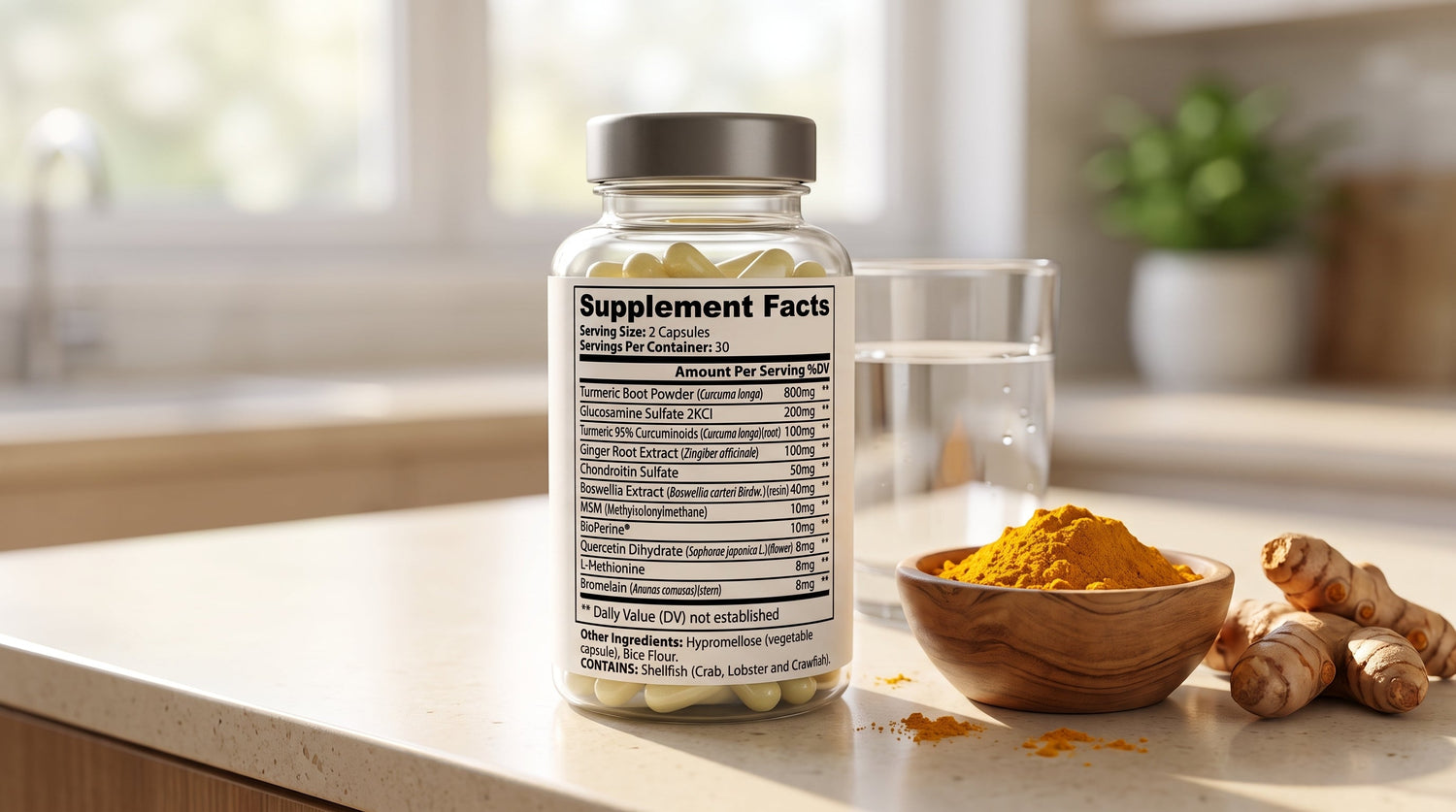
Platinum Turmeric Capsules check all four boxes in one formula: turmeric standardized to 95% curcuminoids, BioPerine® for absorption, plus glucosamine sulfate, chondroitin, Boswellia, MSM, ginger, quercetin, and bromelain — a full-spectrum approach to joint comfort rather than curcumin alone.
How much turmeric per day?
Most clinical research on standardized extracts uses 500–2,000 mg of turmeric extract daily (delivering roughly 150–1,500 mg of curcuminoids), typically split into one or two doses. With Platinum Turmeric, the suggested use is simple: two capsules once daily, ideally 20–30 minutes before a meal with a full glass of water. Because curcumin is fat-soluble, taking it near a meal that contains some fat can further support absorption.
How long does turmeric take to work?
Turmeric is a build-up botanical, not a painkiller. Some people notice easier post-workout recovery within the first couple of weeks, but most joint-comfort studies run 4–12 weeks before measuring meaningful changes. Give it a consistent 8 weeks with daily use before judging results.
A simple daily joint-support routine
- Morning: Two Platinum Turmeric capsules before breakfast. If you like a full AM protocol, see our research-backed morning supplement stack.
- Daytime: Move often — gentle, regular motion is one of the best things you can do for joint comfort. Pair with omega-3s for complementary support (here's why omega-3 fish oil earns its spot).
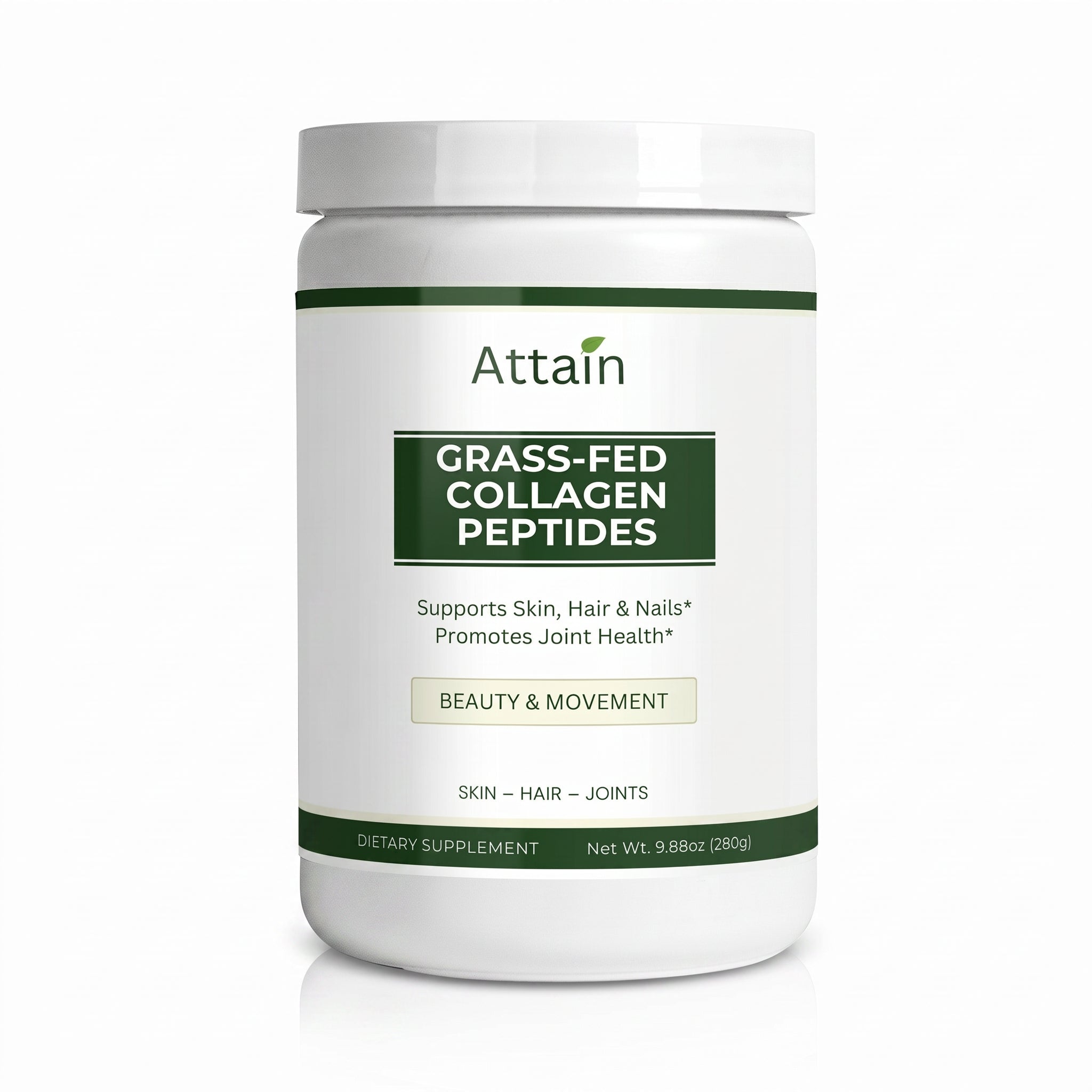
- Evening: Consider collagen peptides in a warm drink — collagen supplies the amino-acid building blocks of cartilage, and it pairs naturally with turmeric for skin and joint support.
Prefer a simpler, botanical-only option for flexibility support? Joint Support Capsules are a plant-powered alternative in the same family.

Is turmeric safe?
Turmeric has an excellent safety record at typical supplement doses, and it's been consumed as a food for millennia. A few sensible cautions:
- High doses can cause mild digestive upset in some people — start with the suggested serving.
- If you take prescription medications (especially blood thinners), are pregnant or nursing, or have a medical condition, talk with your healthcare provider first.
- Allergy note: Platinum Turmeric contains glucosamine derived from shellfish (crab, lobster, crawfish). If you have a shellfish allergy, choose a shellfish-free turmeric product instead.
Frequently asked questions
Is it better to take turmeric or curcumin?
For targeted support, a turmeric extract standardized to 95% curcuminoids beats plain turmeric powder — you'd need spoonfuls of the spice to match one standardized capsule. Cooking with turmeric is still a great habit; supplements just deliver a consistent, research-relevant dose.
Why does turmeric need black pepper?
Curcumin is poorly absorbed on its own. Piperine (black pepper extract) slows its breakdown and has been shown to increase absorption by up to 2,000% — which is why BioPerine® is a non-negotiable on the quality checklist.
Can I take turmeric with collagen or omega-3s?
Yes — they're complementary, not redundant. Turmeric supports a healthy inflammatory response, collagen supplies structural building blocks, and omega-3s support whole-body and heart wellness. Many people take all three daily.
Should I take turmeric in the morning or at night?
Whichever you'll do consistently. Before a meal with some fat is ideal for absorption; many people anchor it to breakfast so it becomes automatic.
Does turmeric stain?
The powder absolutely does — that golden pigment is powerful. Capsules sidestep the mess entirely (and skip the taste).
The bottom line
Turmeric is one of the rare botanicals where centuries of traditional use and modern clinical research point in the same direction: real support for joint comfort, mobility, recovery, and a healthy inflammatory response. The keys are choosing a standardized extract with black pepper for absorption — ideally alongside joint-supportive co-ingredients — and giving it a consistent 8 weeks to work.
Ready to move easier? Try Platinum Turmeric Capsules — 95% curcuminoids, BioPerine®-enhanced absorption, and a full joint-support blend in one daily serving, backed by our 30-day money-back guarantee.
*These statements have not been evaluated by the Food and Drug Administration. This product is not intended to diagnose, treat, cure, or prevent any disease. Consult your healthcare provider before beginning any new supplement.