If your stomach feels tight, gassy, and uncomfortably full an hour after eating — especially after beans, dairy, or a big protein-heavy meal — you are not imagining it. Bloating is one of the most common digestive complaints, and for many people it traces back to how well (or how poorly) food is being broken down.
That is where digestive enzymes enter the conversation. Interest in digestive enzymes for bloating — and in digestive enzymes for gas specifically — has climbed steadily as more people look for a simple, food-first way to feel comfortable after meals instead of unbuttoning their pants and waiting it out. In this guide we will explain why bloating and gas happen, what digestive enzymes actually do, the evidence behind them, how to choose a quality formula, and how to use one as part of a sensible daily routine.

Why you feel bloated after eating
Bloating is the sensation of pressure or fullness in the abdomen, often paired with visible distension, gas, or rumbling. It usually comes down to one thing: food that has not been fully broken down. When carbohydrates, proteins, and fats are not digested efficiently in the upper gut, they travel further down the digestive tract where bacteria ferment them — and that fermentation produces gas.
Several everyday factors can make this worse. Eating quickly, eating large portions, and stress at mealtimes all reduce how thoroughly food is processed. Certain foods are notorious offenders, too: beans and lentils contain complex sugars called oligosaccharides, cruciferous vegetables like broccoli and cabbage are fiber-dense, and dairy contains lactose that many adults do not break down well. Naturally, your body's own enzyme output can also vary from person to person and tends to be lower in some individuals than others.
The result is the familiar after-meal heaviness. Supporting more complete digestion at the source is the logical place to start — and that is exactly what enzymes are designed to do.
What are digestive enzymes?
Digestive enzymes are specialized proteins your body makes to break food down into smaller pieces it can absorb. Your mouth, stomach, pancreas, and small intestine all release them. The major families each have a job: proteases break down protein, lipases break down fat, amylases break down starches, and more targeted enzymes like lactase (for the milk sugar lactose) and alpha-galactosidase (for the complex sugars in beans and cruciferous vegetables) handle the foods most likely to cause gas.
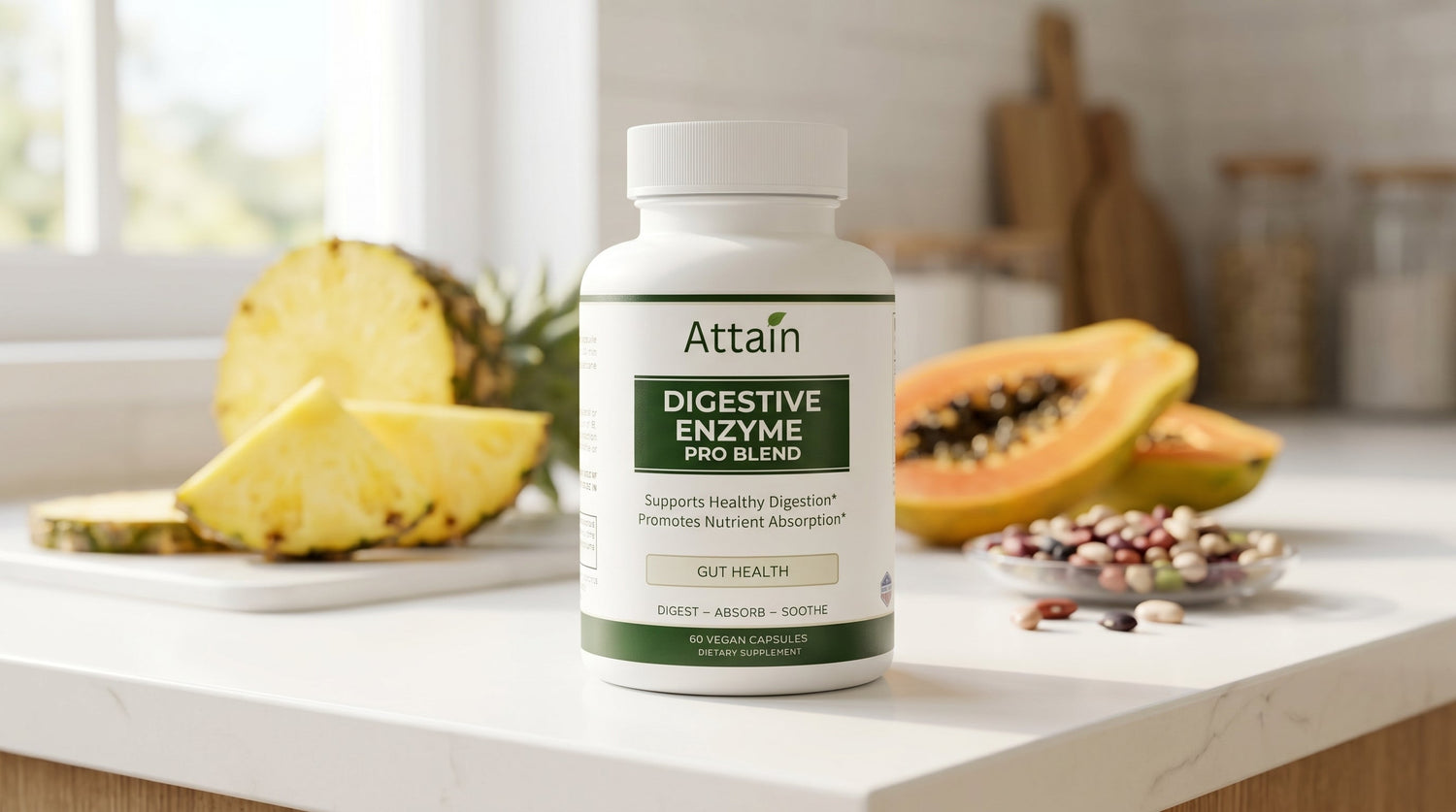
Enzyme supplements supply these same enzymes from plant, fungal, or microbial sources. Taken around mealtimes, they are intended to complement your body's own digestion — giving your gut extra help breaking down the components of a meal so less undigested food reaches the bacteria that produce gas. A well-rounded option like Attain's Digestive Enzyme Pro Blend with Probiotics combines a full-spectrum enzyme blend with targeted enzymes and beneficial probiotic strains in one capsule.
How digestive enzymes work for bloating and gas
The connection between enzymes and bloating is straightforward. Less gas is produced when more of your meal is broken down before it reaches the lower gut. By supplying proteases, lipases, amylase, lactase, and alpha-galactosidase at the moment food arrives, an enzyme supplement is designed to support the breakdown of exactly the food components that most often trigger fermentation and that bloated, gassy feeling.
This is also why enzymes are often discussed alongside — but are different from — probiotics. Enzymes act on the food itself in the upper digestive tract; probiotics are beneficial bacteria that support the gut microbiome over time. The two play complementary roles, which is why some formulas, including the Digestive Enzyme Pro Blend, pair them together.
1. May help reduce bloating and gas after meals
The most sought-after benefit. Enzymes such as alpha-galactosidase target the specific carbohydrates in beans, legumes, and cruciferous vegetables that commonly cause gas, which is why many people reach for enzymes specifically before those meals.
2. Supports more complete breakdown of protein, fat, and carbs
A broad-spectrum blend covers all three macronutrients. Plant-derived enzymes like bromelain (from pineapple) and papain (from papaya) support protein digestion, while fungal lipase supports the breakdown of dietary fats.
3. May support better nutrient absorption
Food that is broken down more completely is easier for the body to absorb. By supporting thorough digestion, enzymes may help you get more nutritional value from the meals you already eat.
4. Helps with lactose and hard-to-digest foods
Lactase supports the breakdown of the lactose in dairy, and alpha-galactosidase helps with the complex sugars in legumes and cruciferous veg — making enzymes especially relevant for people who feel uncomfortable after these specific foods.
5. May support everyday digestive comfort and steadier energy
When digestion feels easier, the after-meal slump and heaviness often ease too. Many people describe a general sense of comfort and more consistent energy through the day when their digestion is running smoothly.
What to look for in the best digestive enzyme supplement
Not all enzyme products are equal. When comparing options, look for:
- A full-spectrum blend. Protease, lipase, and amylase cover the three macronutrients. The best formulas add targeted enzymes — lactase and alpha-galactosidase — for the foods most likely to cause bloating.
- Recognizable plant and fungal enzymes. Bromelain, papain, and fungal lipase and lactase are well-studied, vegetarian-friendly sources.
- Bonus probiotics. A formula that includes beneficial strains supports the microbiome alongside the meal-time enzyme action.
- Clean manufacturing. Choose a product made in a GMP-certified facility, ideally vegan-friendly, gluten-free, and free of artificial additives.
- Sensible serving size and value. Check the capsules-per-bottle and the suggested serving so you know the real cost per day.
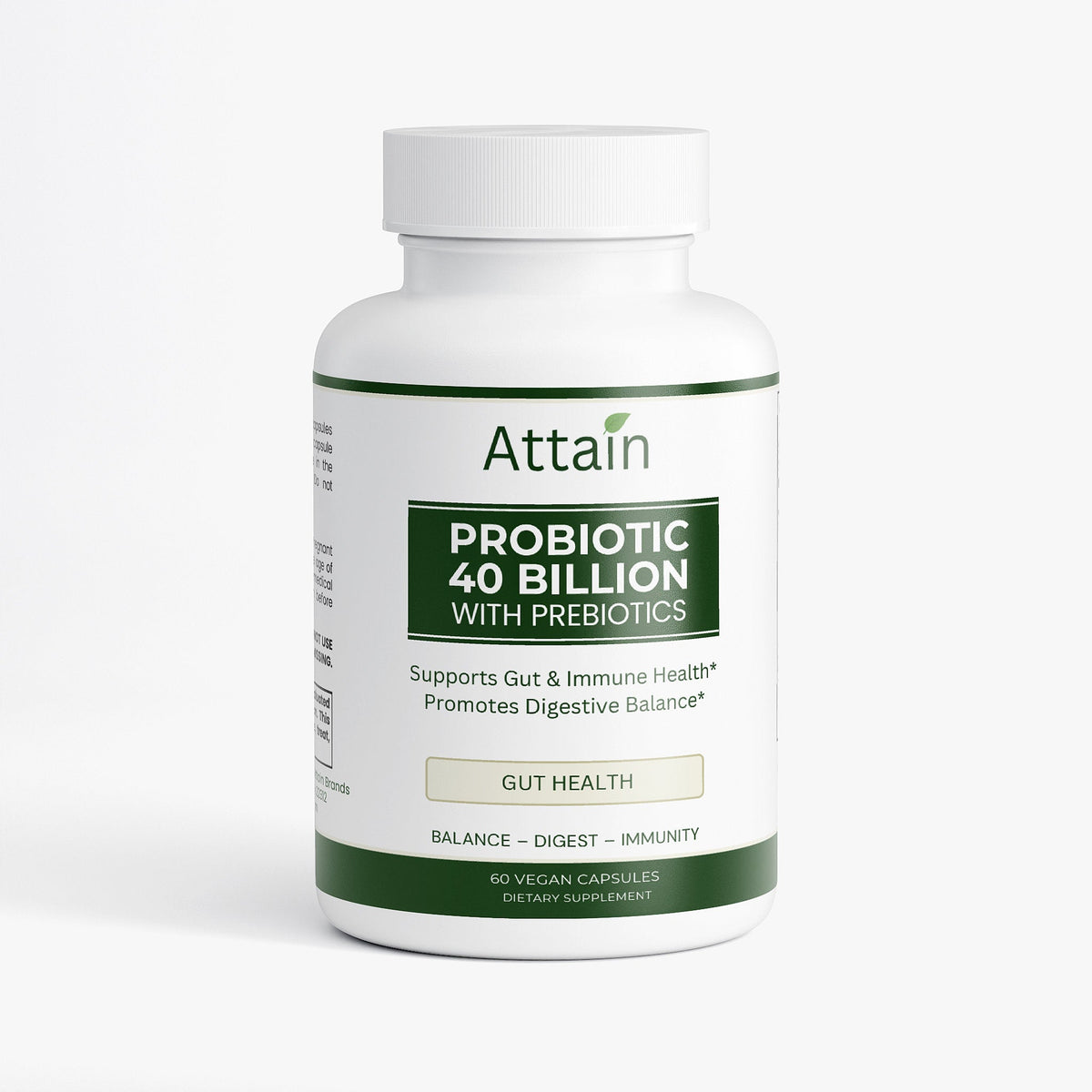
Attain's Digestive Enzyme Pro Blend with Probiotics was built around this checklist: a Makzyme-Pro™ blend with fungal protease, bromelain and papain, fungal lipase and lactase, alpha-galactosidase, and a probiotic trio, in vegetable capsules made in a GMP-certified U.S. facility. If your goal is broader daily gut support, you might also pair it with a probiotic such as the Probiotic 20 Billion CFU or a greens blend like Ultra Cleanse Greens.
How to take digestive enzymes (dosage and timing)
Timing matters more with enzymes than with most supplements, because they need to be present when food arrives. A typical approach — and the label direction for the Digestive Enzyme Pro Blend — is to take one capsule twice daily, about 20–30 minutes before a meal, with water, or as directed by your healthcare professional. Many people focus their doses on their largest or most troublesome meals (for example, before a big dinner or before a meal heavy in beans or dairy).
How long do digestive enzymes take to work?
Because enzymes act on the food in that meal, any easing of bloating or gas tends to be felt relatively quickly — often within the same meal or the hours after it, rather than after weeks of buildup. The probiotic side of a combination formula works more gradually, supporting the microbiome over days and weeks of consistent use. For the clearest read on how they help you, take them consistently for a couple of weeks and pay attention to how you feel after your usual trigger meals.
A simple daily routine
Keeping it realistic works best:
- Morning: one capsule about 20–30 minutes before breakfast with water.
- Evening: one capsule before your largest meal, especially if it includes beans, dairy, or cruciferous vegetables.
- Everyday habits: eat slowly, keep portions reasonable, stay hydrated, and move a little after eating — all of which support comfortable digestion alongside the supplement.
If steadier all-day energy is also a goal, smoother digestion and better nutrient absorption pair naturally with the basics covered in our guide to the best supplements for energy and a research-backed morning supplement stack.
Are digestive enzymes safe?
Digestive enzyme supplements are generally well tolerated by healthy adults when used as directed. Do not exceed the recommended dose. Some people may notice mild digestive changes when starting. As a precaution, pregnant or nursing mothers, anyone under 18, and individuals with a known medical condition (or who take medication or are preparing for surgery) should talk with a healthcare professional before starting any new supplement. Enzymes are meant to support normal digestion — persistent, severe, or worsening bloating or pain deserves a conversation with your doctor, since it can signal something that needs proper evaluation. For more on the microbiome side of gut comfort, see our overview of gut health probiotics.

Frequently asked questions
Do digestive enzymes really help with bloating?
Enzymes work by helping break food down more completely in the upper gut, which means less undigested food reaches the bacteria that ferment it and produce gas. Targeted enzymes like alpha-galactosidase and lactase are especially relevant for the bean-, vegetable-, and dairy-related bloating many people experience. They support comfortable digestion rather than treating any medical condition.
Do digestive enzymes help with gas as well as bloating?
Yes — gas and bloating share the same root cause, so the same enzymes that support bloating also target gas. Alpha-galactosidase breaks down the complex sugars in beans, lentils, and cruciferous vegetables before bacteria in the lower gut can ferment them into gas, and lactase does the same for the lactose in dairy. Taking a full-spectrum enzyme blend before your typical trigger meals is the most direct way to address gas specifically.
Digestive enzymes vs probiotics — what is the difference?
Enzymes act on the food in your meal, supporting the breakdown of protein, fat, and carbohydrates around the time you eat. Probiotics are beneficial bacteria that support the gut microbiome over time. They do different jobs, which is why combination formulas like the Digestive Enzyme Pro Blend include both.
When should I take a digestive enzyme?
Most formulas, including Attain's, are designed to be taken about 20–30 minutes before a meal with water so the enzymes are ready when food arrives. Many people take them before their largest or most trigger-prone meals.
Can I take digestive enzymes every day?
They are formulated for daily use as directed on the label. As with any supplement, do not exceed the recommended dose, and check with your healthcare provider if you have a medical condition or take medication.
Which enzymes are best for gas from beans and vegetables?
Alpha-galactosidase targets the complex sugars (oligosaccharides) in beans, legumes, and cruciferous vegetables, while lactase handles dairy. A blend that includes both, plus broad-spectrum protease, lipase, and amylase, covers the widest range of meals.
The bottom line
If after-meal bloating or gas is a regular frustration, digestive enzymes are one of the simplest, most logical places to start: they support more complete breakdown of the foods most likely to cause gas, so meals feel lighter and more comfortable. Look for a full-spectrum blend with targeted lactase and alpha-galactosidase — bonus points for added probiotics — from a quality, GMP-certified maker. Attain's Digestive Enzyme Pro Blend with Probiotics checks every box in one daily capsule. Take it consistently before your meals for a couple of weeks and let your own after-dinner comfort be the judge.
*These statements have not been evaluated by the Food and Drug Administration. This product is not intended to diagnose, treat, cure, or prevent any disease. Consult your healthcare provider before beginning any new supplement.