If chronic stress has you running on empty—wired but tired, foggy by mid-afternoon, and staring at the ceiling at night—your body may be stuck in a cortisol loop it can't switch off. Ashwagandha, one of the most researched adaptogens in modern nutrition science, is emerging as a natural way to help your body adapt to that stress and find its way back to balance.
In this guide we'll break down what ashwagandha actually does, the science behind its benefits for stress, anxiety, sleep, and energy, the correct dosage, and why pairing it with black pepper meaningfully changes how much your body absorbs.
What Is Ashwagandha?
Ashwagandha (Withania somnifera) is a small evergreen shrub native to India, the Middle East, and parts of Africa. Its root has been used in Ayurvedic medicine for more than 3,000 years, traditionally as a rasayana—a tonic taken to promote vitality and longevity. The name itself roughly translates to “smell of the horse,” a nod to both its earthy aroma and the traditional belief that it imparts the strength and stamina of a stallion.
In contemporary terms, ashwagandha is classified as an adaptogen: a botanical that helps the body resist and adapt to physical, chemical, and biological stressors while nudging key systems back toward equilibrium. Its activity is largely attributed to a group of naturally occurring compounds called withanolides, the steroidal lactones concentrated in the root that researchers most often study.
How Ashwagandha Works: The Cortisol Connection
To understand why ashwagandha matters, it helps to understand cortisol. When you encounter a stressor, your brain activates the hypothalamic-pituitary-adrenal (HPA) axis, signaling your adrenal glands to release cortisol—your primary stress hormone. In short bursts, cortisol is useful: it sharpens focus and mobilizes energy. The problem is modern, chronic stress, which can leave cortisol elevated around the clock. Persistently high cortisol is associated with disrupted sleep, stubborn fatigue, difficulty concentrating, and that familiar “tired but wired” feeling.
Ashwagandha appears to work by helping to modulate this HPA-axis response and support healthier cortisol rhythms. Several randomized, placebo-controlled trials have reported meaningful reductions in self-reported stress and in measured cortisol levels among adults supplementing with standardized ashwagandha root extract over 6 to 8 weeks. Rather than sedating you, it helps your body's own stress-response machinery return to a calmer baseline—which is exactly what you'd want from a true adaptogen.

The Science-Backed Benefits of Ashwagandha
1. Helps the Body Manage Stress and Anxiety
Stress relief is the most studied and most consistent benefit of ashwagandha. In controlled trials, participants taking standardized root extract have reported significant drops in perceived stress scores compared with placebo, alongside lower cortisol. For anyone feeling perpetually overstretched, this is the headline reason ashwagandha has become a daily staple. If managing day-to-day stress is your goal, you may also be interested in other calming adaptogens like organic Reishi mushroom.
2. Supports Deeper, More Restorative Sleep
The species name somnifera literally means “sleep-inducing,” and the traditional use tracks with emerging evidence. Studies suggest ashwagandha may help people fall asleep faster, improve overall sleep quality, and wake feeling more refreshed—likely an extension of its calming effect on the stress response rather than a sedative knockout. For a more complete nighttime routine, ashwagandha pairs naturally with Magnesium Glycinate and our Sleep Magic capsules.
3. Promotes Steady, Natural Energy and Stamina
Because chronic stress is exhausting, calming the stress response often translates into better, steadier energy. Beyond that, ashwagandha has been studied for its effects on physical performance: trials in active adults have reported improvements in measures of strength, endurance, and oxygen utilization (VO₂ max). The result many people notice is sustained energy throughout the day—without the spikes and crashes of stimulants.
4. Supports Focus, Memory, and Mental Clarity
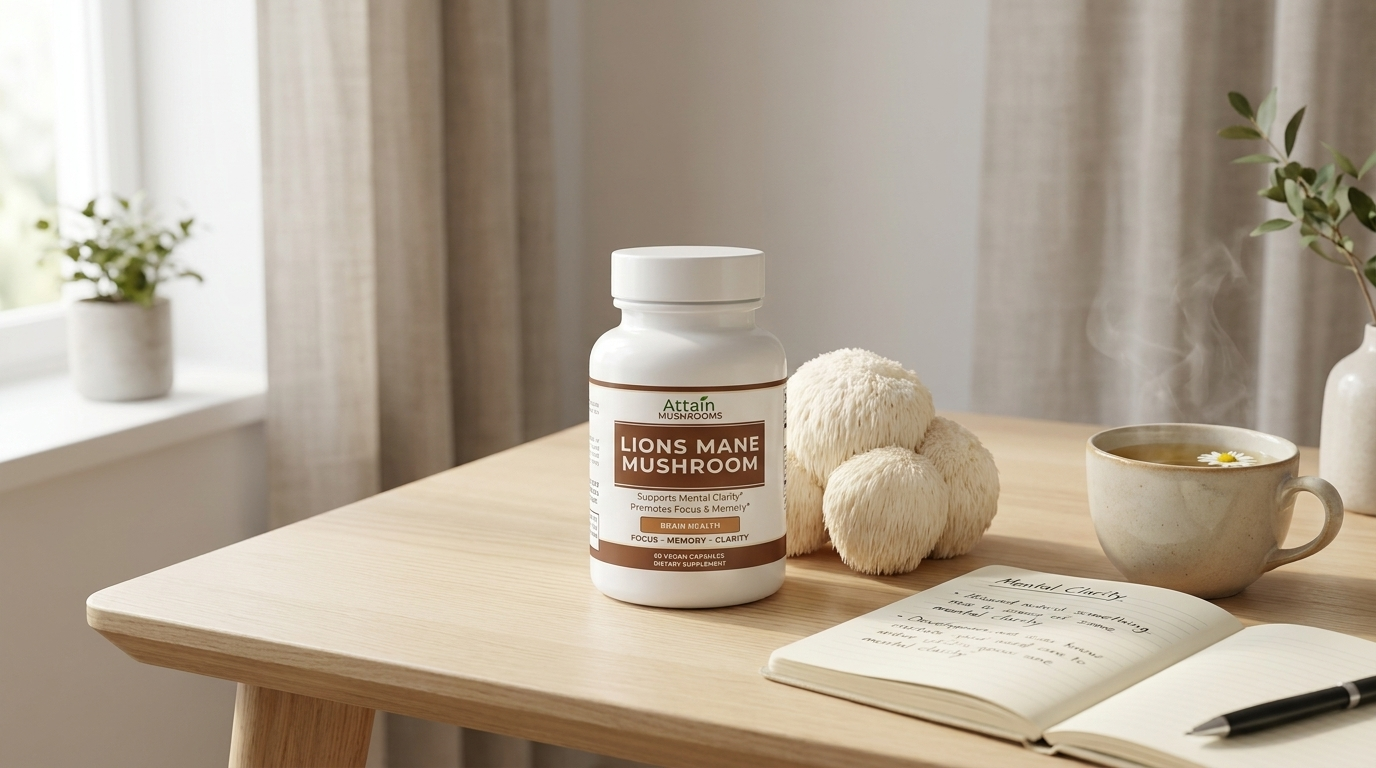
Ashwagandha's withanolides have demonstrated neuroprotective and anti-inflammatory activity in research settings, and some studies point to improvements in attention, reaction time, and working memory. When stress and poor sleep are the things clouding your thinking, addressing them at the root frequently sharpens focus as a knock-on effect. To round out a cognitive-support stack, explore our Nootropic Brain & Focus Formula and read 7 ways to boost your cognitive function naturally.
5. Benefits for Men and Women
Ashwagandha is one of the rare supplements with relevant research across the board. In men, studies have examined its role in supporting healthy testosterone levels, vitality, and exercise recovery. In women, interest centers on mood balance, stress resilience, and overall well-being. The common thread is the same adaptogenic, cortisol-modulating mechanism—applied to the demands of everyday life.
Why Black Pepper Makes a Real Difference
Here's a detail many ashwagandha products overlook: absorption. The active withanolides are only useful if your body can actually take them up. That's where black pepper comes in. Black pepper contains piperine, a compound shown to enhance the bioavailability of many nutrients and botanical compounds by slowing their breakdown and improving uptake in the gut.
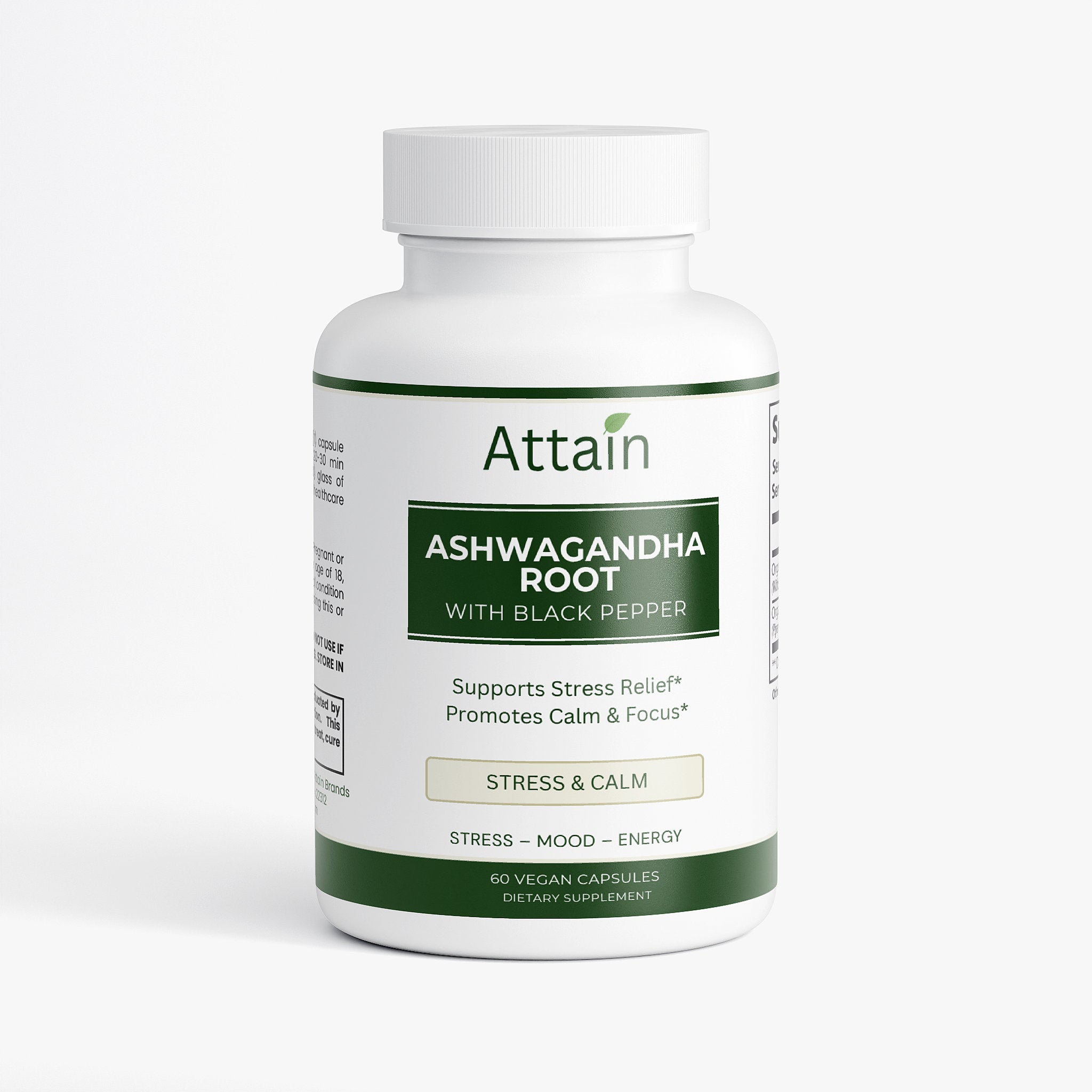
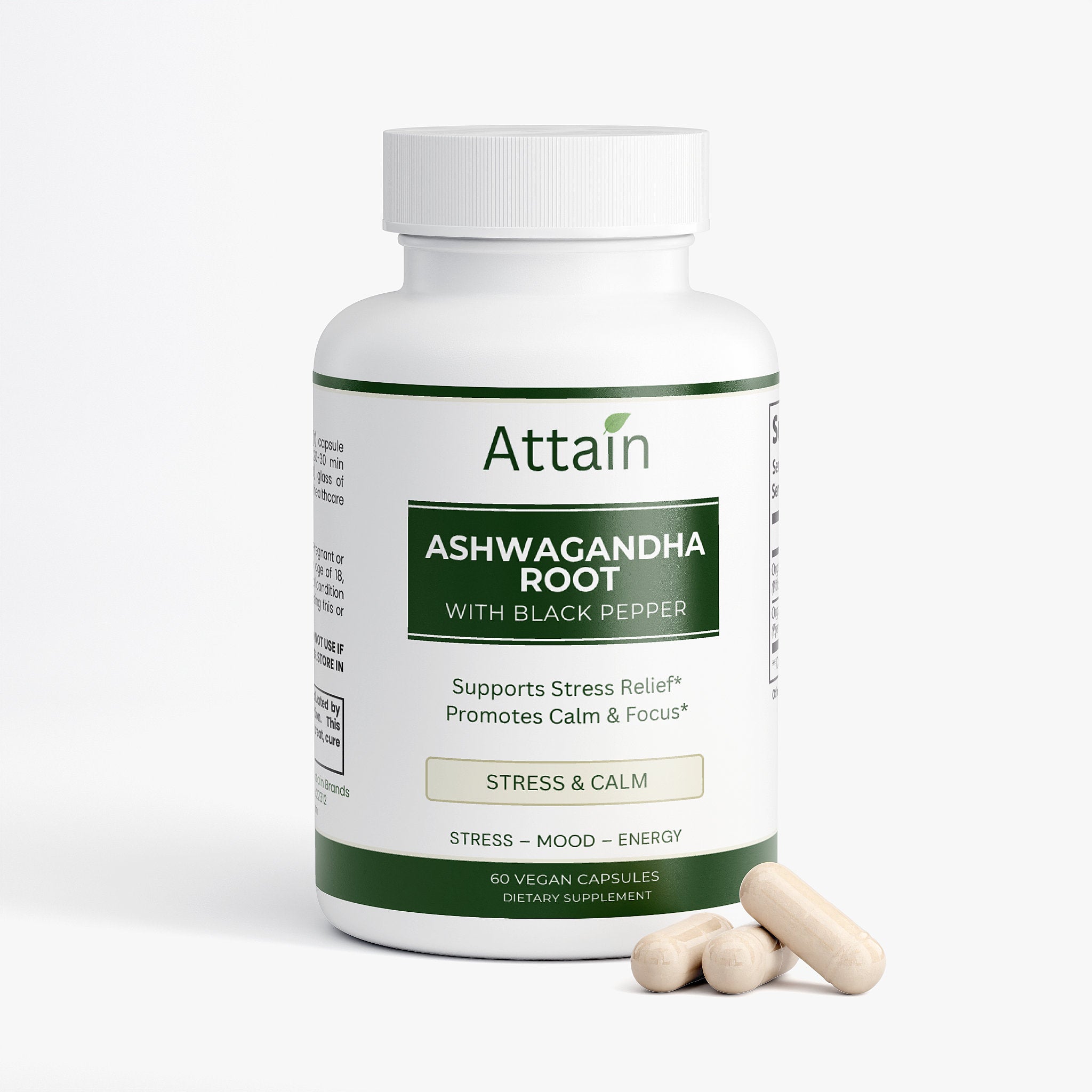
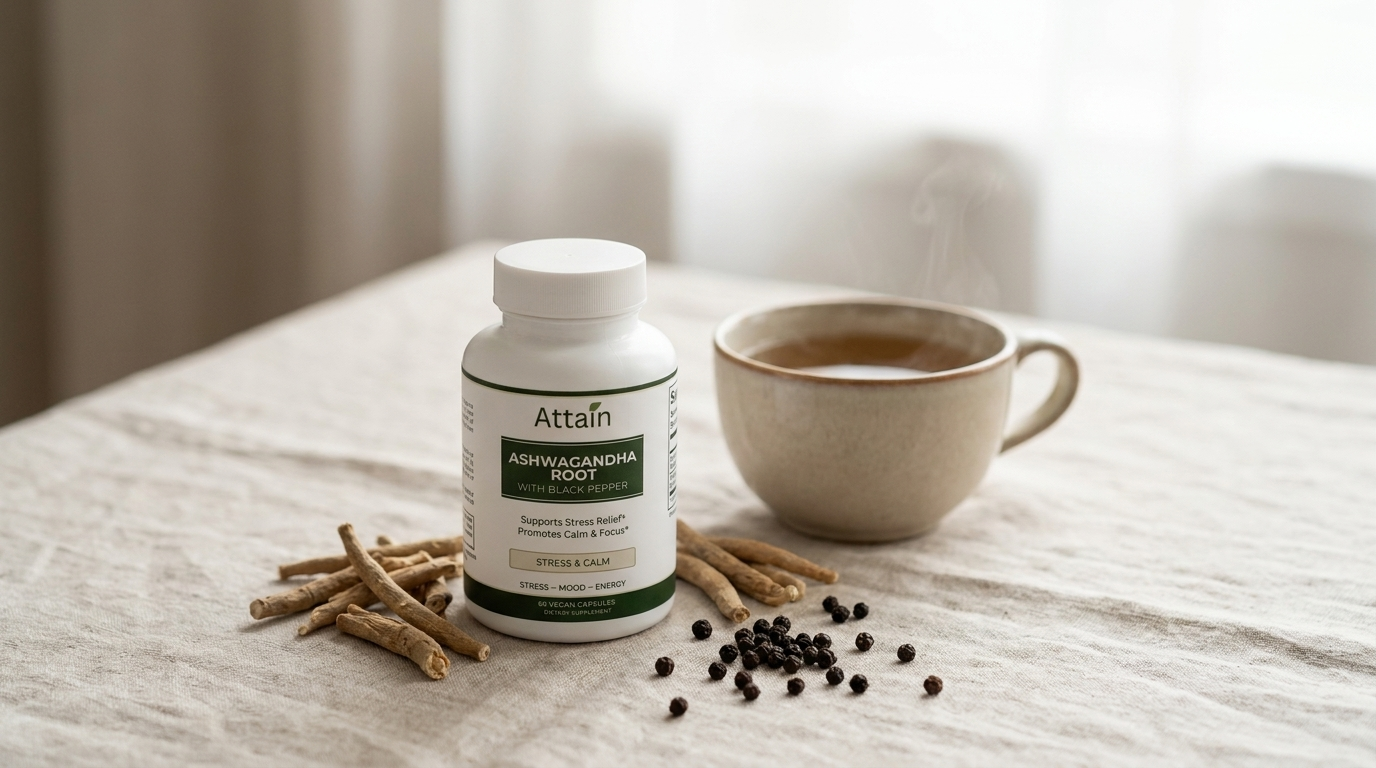
That's exactly why Attain's Ashwagandha Root Capsules are formulated with organic black pepper extract—so more of every dose is available to do its job. It's a small addition with an outsized impact on effectiveness, and it's the difference between a supplement that looks good on a label and one your body can genuinely use.
How Much Ashwagandha Should You Take?
Most clinical research uses 250–600 mg of standardized ashwagandha root extract per day, typically split into one or two doses. Attain's formula is designed around a simple daily routine: take two capsules once daily, ideally 20–30 minutes before a meal with a full glass of water. Ashwagandha is best thought of as a consistency supplement—the most notable benefits in studies tend to appear after several weeks of daily use, not after a single dose.
What to Look for in a Quality Ashwagandha Supplement
Not all ashwagandha is created equal. When you're choosing a product, look for:
- Root-based, not leaf-based — the root is where the traditional, well-studied compounds are concentrated.
- Organic and clean — certified organic, non-GMO, and free of unnecessary fillers.
- An absorption enhancer — black pepper (piperine) to maximize bioavailability.
- Transparent manufacturing — made in a GMP-certified facility for verified purity and potency.
Attain's Organic Ashwagandha Root Capsules with Black Pepper check every one of these boxes: certified organic root, vegan, gluten-free, non-GMO, and manufactured in the USA in a GMP-certified facility—no synthetic stimulants, no harsh additives.
Is Ashwagandha Safe?
Ashwagandha is generally well tolerated when used as directed, and it is non-habit-forming. That said, it isn't right for everyone. Because it can interact with certain conditions and medications, it's best to talk with a healthcare professional before starting if you are pregnant or nursing, under 18, taking thyroid, sedative, or immune-related medications, or managing a diagnosed medical condition. As with any supplement, don't exceed the recommended dose.
Related Products
Ready to build your stress-and-sleep routine? Start with Organic Ashwagandha Root Capsules with Black Pepper for everyday stress resilience, and browse the full Sleep & Calm collection to round out your nightly wind-down.
Frequently Asked Questions
How long does ashwagandha take to work? Some people notice a calmer baseline within the first week or two, but most clinical benefits—reduced stress, better sleep—are measured after 6 to 8 weeks of consistent daily use.
Can I take ashwagandha every day? Yes. It's designed for daily use, and consistency is where the benefits accumulate.
Should I take ashwagandha in the morning or at night? Either works. Many take it in the morning for daytime stress resilience; those focused on sleep often prefer the evening. The most important factor is taking it consistently.
Why does Attain add black pepper? The piperine in black pepper enhances the absorption of ashwagandha's active withanolides, so you get more from every capsule.
The Bottom Line
Ashwagandha is one of the few supplements where centuries of traditional use and modern clinical research point in the same direction: it helps the body adapt to stress, supports calmer cortisol rhythms, and—as a result—can improve sleep, energy, focus, and overall resilience. Paired with black pepper for superior absorption, it's a simple, science-forward addition to a daily wellness routine.
Ready to help your body find its balance? Explore Attain's Organic Ashwagandha Root Capsules with Black Pepper and make stress resilience part of your everyday.
These statements have not been evaluated by the Food and Drug Administration. This product is not intended to diagnose, treat, cure, or prevent any disease. Consult your healthcare provider before beginning any new supplement.