
Standing in front of the supplement shelf, it's a fair question: if you already take a daily multivitamin, do you really need moringa — or could one whole-food green leaf do the same job better? Both promise to fill the gaps a busy diet leaves behind, but they go about it very differently. Here's an honest, side-by-side look at moringa vs. a multivitamin, so you can decide which belongs in your routine.
The short answer
A multivitamin delivers isolated, often synthetic nutrients at fixed, measurable doses. Moringa delivers a narrower but whole-food spectrum of vitamins, minerals, amino acids, and antioxidants from a single plant your body tends to recognize and absorb readily. Neither is universally "better" — they're different tools. Many people use moringa as a cleaner, food-derived daily foundation, and add a multivitamin only if they need specific nutrients at higher doses.
What a multivitamin actually is
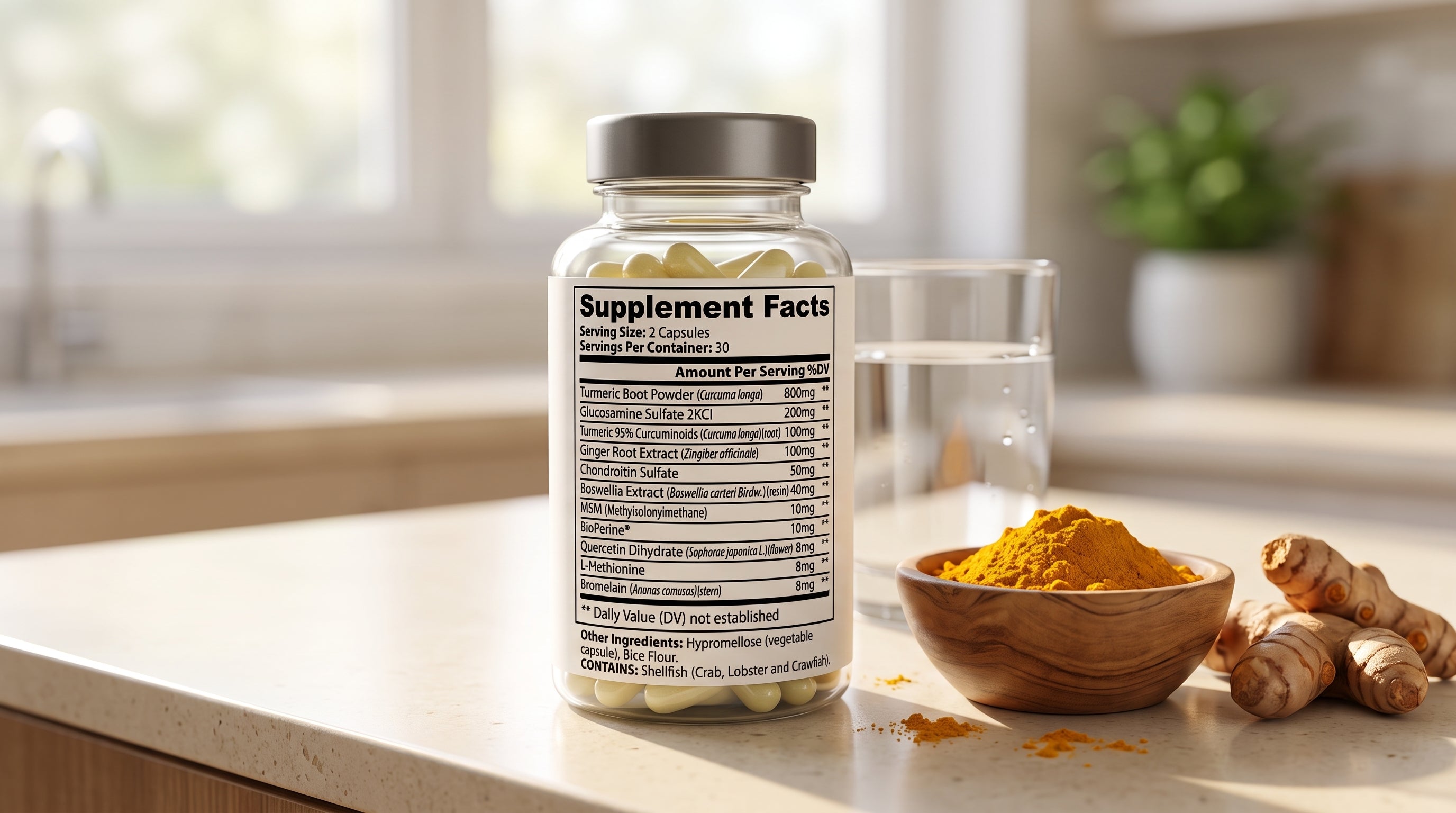
A typical multivitamin is a formulated blend of isolated vitamins and minerals, often manufactured synthetically to hit precise percentages of daily value. Its strengths are precision and coverage: you know exactly how much vitamin D, B12, or iron you're getting, and a good formula can target known gaps. The trade-offs are that synthetic nutrients aren't always absorbed as efficiently as their whole-food counterparts, mega-doses can pass straight through, and many formulas include fillers, binders, or artificial colors.
What moringa brings to the table
Moringa (Moringa oleifera) is a whole-food leaf, not a lab blend. A single serving naturally contains vitamins A, C, and E, B vitamins, minerals like calcium, potassium, iron, and magnesium, all nine essential amino acids, and plant antioxidants such as quercetin and chlorogenic acid. Because these come packaged together as nature made them, the body often recognizes and uses them efficiently. You can read the full breakdown in our guide to moringa benefits, or skip straight to Moringa Pure Capsules.
Moringa vs. multivitamin: side by side
| Feature | Moringa | Typical Multivitamin |
|---|---|---|
| Source | Whole-food plant leaf | Isolated / often synthetic |
| Nutrient form | Naturally occurring, food-bound | Synthesized, fixed doses |
| Antioxidants & phytonutrients | Yes (quercetin, chlorogenic acid, beta-carotene) | Limited or none |
| Amino acids | All nine essential | Usually none |
| Precise high-dose targeting | No | Yes |
| Synthetic additives | Typically none | Often present |
Which should you choose?
Choose moringa if you want a clean, whole-food daily foundation — broad nourishment, antioxidants, and steady energy without synthetic fillers, and you prefer food-derived nutrition your body recognizes. Choose a multivitamin if you have a specific, diagnosed gap (for example, low vitamin D or B12) that needs a precise, higher dose. Use both if you want a whole-food base from moringa plus targeted top-ups for the one or two nutrients you know you're short on.
Can moringa replace my multivitamin?
For many people looking for general daily coverage, moringa works well as a cleaner alternative to a basic multivitamin. But if you rely on a multivitamin for a specific clinical reason — pregnancy, a known deficiency, or a doctor's recommendation — don't swap it out without talking to your healthcare provider first. Moringa complements those needs; it doesn't necessarily replace a targeted therapeutic dose.
How to take moringa as your daily base
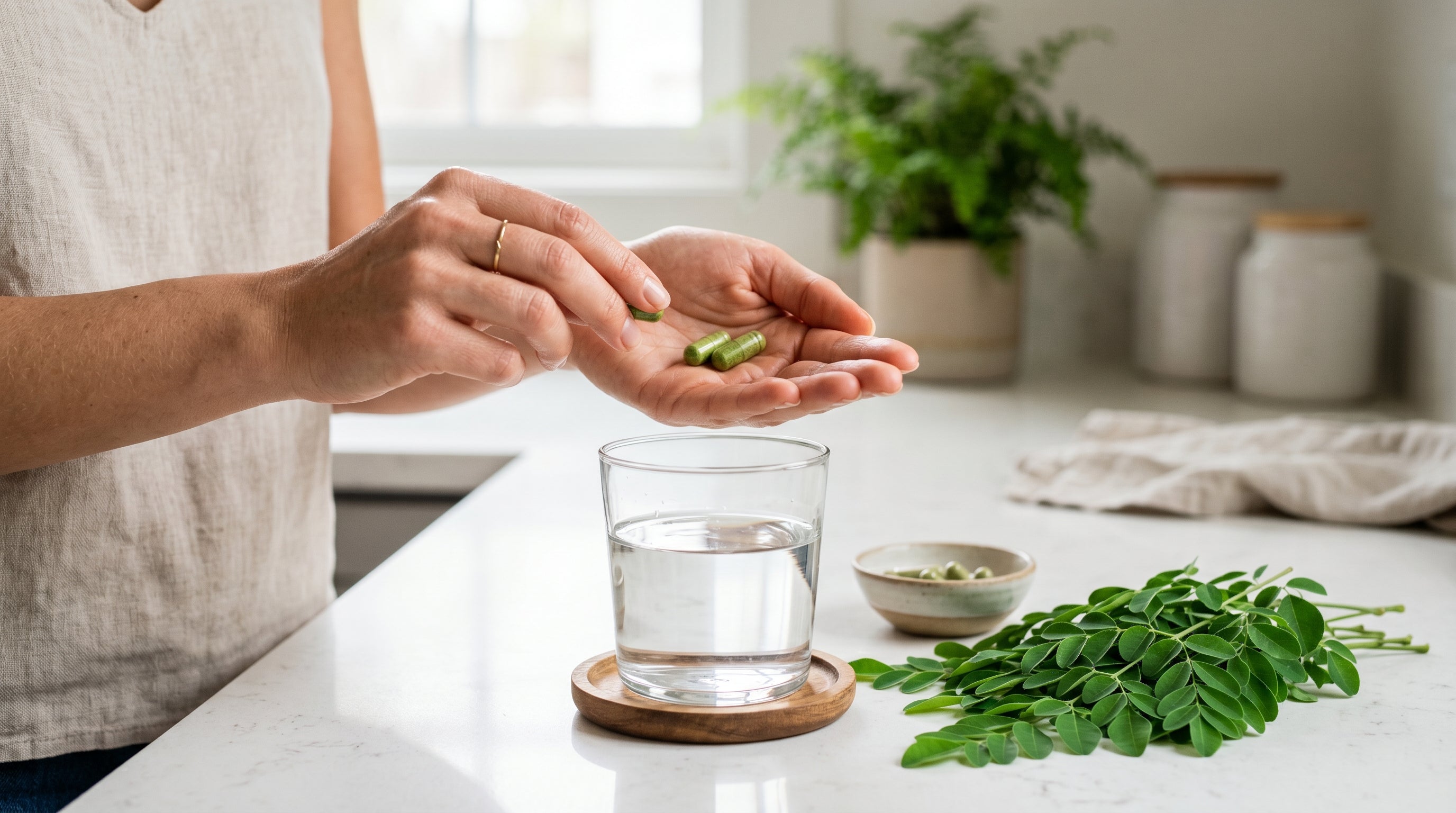
If you go the whole-food route, consistency is what makes it work. With Moringa Pure Capsules, the suggested use is two capsules once daily, ideally 20–30 minutes before a meal with an 8 oz glass of water. For a deeper look at amounts and timing, see our moringa dosage guide. Many people pair moringa with a broader greens routine — explore options in Immunity & Balance and Energy & Performance.
Frequently asked questions
Is moringa better than a multivitamin?
Neither is universally better. Moringa is a whole-food source of broad nutrition and antioxidants; a multivitamin offers precise, high-dose targeting of specific nutrients. The best choice depends on whether you want general daily nourishment or to correct a specific gap.
Can I take moringa and a multivitamin together?
Yes, many people do — moringa as a whole-food base plus a multivitamin for targeted nutrients. If you're combining several supplements, it's wise to review the totals with your healthcare provider to avoid overlapping high doses.
Does moringa have vitamin D or B12?
Moringa is rich in many vitamins and minerals but is not a reliable source of vitamin D or B12. If you need those specifically, a targeted supplement or a multivitamin is the better route.
Is moringa safe to take every day?
Yes — moringa has a long history of daily use as a food and is generally well tolerated. Pregnant or nursing women and anyone on medication should consult a provider first.
The bottom line
A multivitamin is a precision tool; moringa is a whole-food foundation. If you want clean, broad daily nourishment your body recognizes, moringa is a strong everyday base — and you can always layer a targeted nutrient on top if you know you need it. Ready to start? Moringa Pure Capsules deliver whole moringa oleifera leaf in a simple, vegan, once-daily capsule.
*These statements have not been evaluated by the Food and Drug Administration. This product is not intended to diagnose, treat, cure, or prevent any disease. Consult your healthcare provider before beginning any new supplement.