Your gut has two very different helpers working on your behalf, and confusing them means you might be reaching for the wrong one when something feels off after a meal.
Digestive enzymes and probiotics both live in the "gut health" aisle, they're sometimes combined in the same bottle, and both get credit for easing bloating and digestive discomfort. But they are not interchangeable. One acts on the food in front of you right now; the other works over weeks to shape the bacteria living in your gut. Understanding digestive enzymes vs probiotics makes it much easier to pick the right support for what's actually bothering you — or to see why you might benefit from both.
What Are Digestive Enzymes?
Digestive enzymes are proteins that break food down into smaller pieces your body can absorb. Your body already produces its own — in your mouth, stomach, pancreas, and small intestine — but production can vary from person to person and can dip with age, stress, or certain digestive conditions. Enzyme supplements add proteases (for protein), lipases (for fat), amylases (for starch), and targeted enzymes like lactase and alpha-galactosidase to help finish that job at mealtime, before undigested food reaches the bacteria that ferment it into gas. We cover this in detail in our guide to digestive enzymes for bloating.
What Are Probiotics?
Probiotics are live beneficial bacteria — strains like Lactobacillus and Bifidobacterium — that support the trillions of microorganisms already living in your gut. Rather than acting on a single meal, probiotics work over time to help maintain a balanced microbiome, which is linked to digestive comfort, regularity, and broader immune support. You can read more in our overview of gut health probiotics.
How They Work: Side by Side
| Focus | Digestive Enzymes | Probiotics |
|---|---|---|
| What they do | Break down food into absorbable nutrients | Support the balance of bacteria in your gut |
| When they act | At the meal, within hours | Gradually, over days and weeks |
| Best known for | Easing bloating and gas tied to specific foods | Supporting regularity and long-term gut balance |
| Typical timing | 20–30 minutes before meals | Once daily, any consistent time |
Key Benefits of Each
1. Enzymes target specific trigger foods
Alpha-galactosidase and lactase are built for the exact carbohydrates and dairy sugars that most often cause after-meal gas — beans, cruciferous vegetables, and lactose.
2. Probiotics support the bigger picture
A well-balanced microbiome is associated with steadier digestion, regularity, and immune resilience over the long run, not just around a single meal.
3. Enzymes work fast; probiotics work cumulatively
Enzymes are felt meal to meal. Probiotics need consistent daily use for several weeks before most people notice a difference.
4. Together, they cover more ground
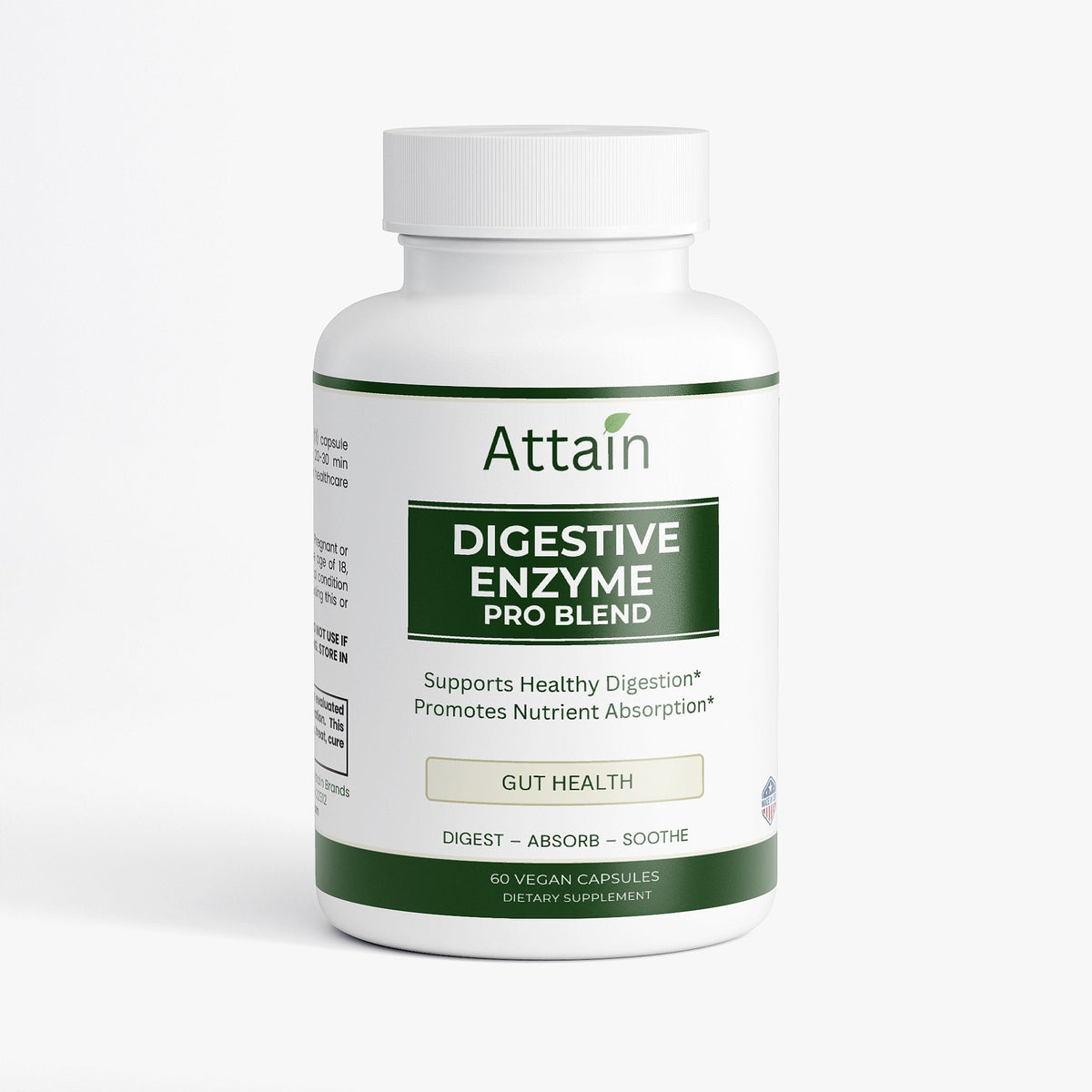
Because they act at different points in digestion, using both — as in a combination formula like Attain's Digestive Enzyme Pro Blend with Probiotics — addresses both the immediate breakdown of food and the longer-term microbiome side of digestion.
Do You Need Both?
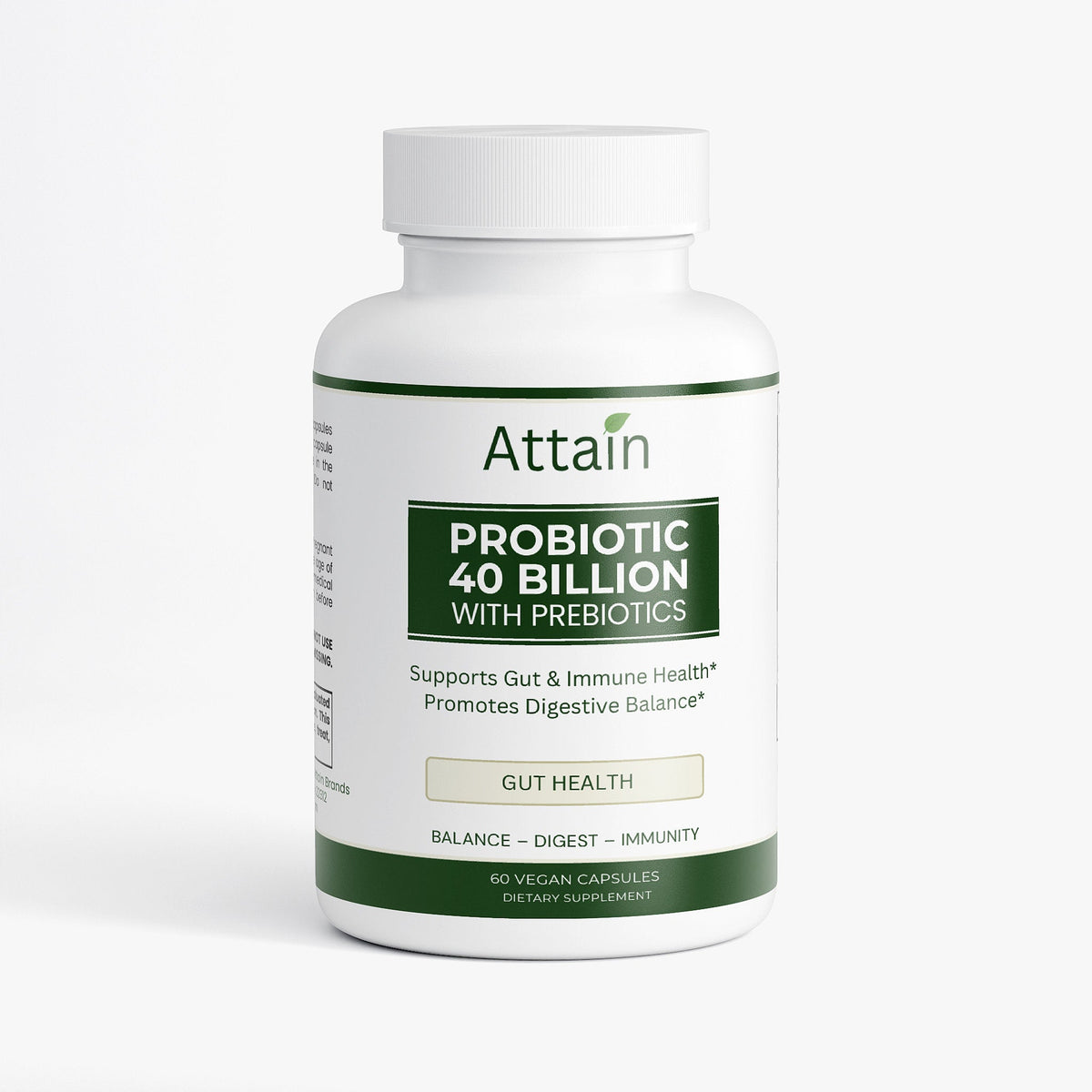
Not necessarily — it depends on your symptoms. If discomfort shows up predictably after specific foods (beans, dairy, a big protein-heavy dinner), that pattern points toward digestive enzymes. If your main concerns are general regularity, occasional gut imbalance after antibiotics or travel, or broader digestive resilience, a probiotic like our Probiotic 20 Billion CFU is the more targeted starting point. Many people find a combination formula the simplest way to cover both bases in one daily capsule.
How to Choose
Match the product to the symptom: choose an enzyme blend for food-triggered bloating and gas, a probiotic for regularity and general gut balance, or a combination formula if you want both covered without managing two separate bottles. Look for a full-spectrum enzyme blend with lactase and alpha-galactosidase, and for probiotics, check for a named strain count (CFU) and a GMP-certified U.S. manufacturer.
Is It Safe to Take Both Together?
Yes, for most healthy adults. Enzymes and probiotics act through different mechanisms and are commonly combined in a single formula. As with any supplement, follow the label directions, do not exceed the recommended dose, and check with your healthcare provider first if you are pregnant, nursing, under 18, or managing a medical condition.
FAQ
Should I take a digestive enzyme or a probiotic?
If your discomfort follows specific foods like beans or dairy, start with a digestive enzyme. If your goal is general regularity or long-term gut balance, a probiotic is the more targeted choice. Many people benefit from both.
Can digestive enzymes and probiotics be taken together?
Yes. They act through different mechanisms and are frequently combined in a single formula, such as an enzyme blend with added probiotic strains.
Which works faster, enzymes or probiotics?
Digestive enzymes act quickly, often within the same meal. Probiotics work gradually, typically requiring several weeks of consistent daily use before effects are noticeable.
Do probiotics help with bloating too?
They can, especially bloating related to gut imbalance, but they work more gradually than enzymes. For bloating tied to specific trigger foods, digestive enzymes typically bring more immediate relief.
The Bottom Line
Digestive enzymes and probiotics both support digestion, but they solve different problems: enzymes break down the meal in front of you, while probiotics support the gut microbiome over time. If your discomfort is tied to specific foods, start with an enzyme. If you're after broader gut balance, start with a probiotic. And if you want both covered at once, a combination formula like Attain's Digestive Enzyme Pro Blend with Probiotics is built to do exactly that.
These statements have not been evaluated by the Food and Drug Administration. This product is not intended to diagnose, treat, cure, or prevent any disease. Consult your healthcare provider before beginning any new supplement.