Rubbing your eyes by mid-afternoon, squinting at your phone in bed, or noticing text just isn't as crisp as it used to be? Your eyes work harder than almost any other organ in your body, and modern life — screens, blue light, long hours — doesn't make it easier. Diet plays a bigger role in eye health than most people realize, which is exactly where a well-formulated vision support supplement can help.
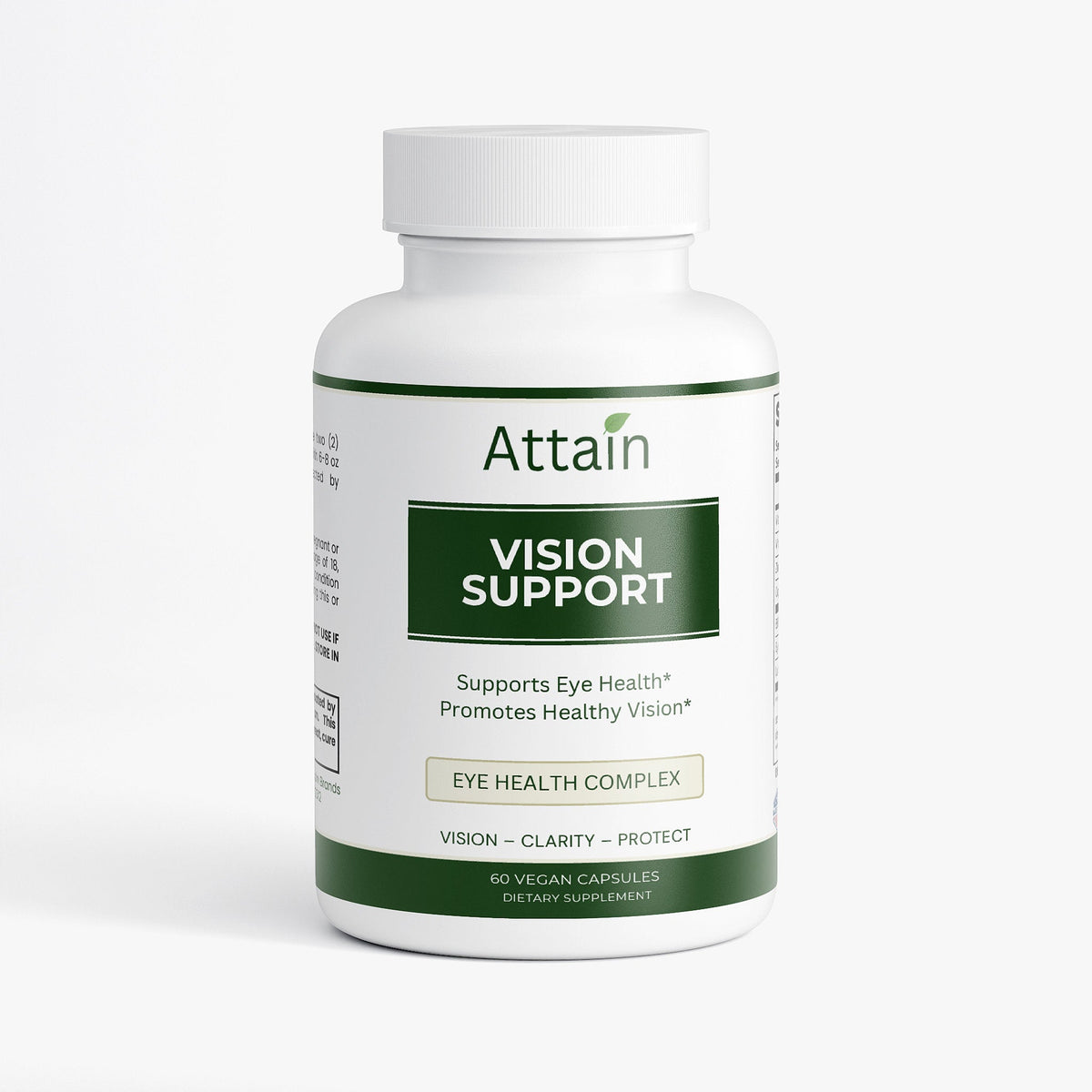
This guide covers what actually supports long-term eye health, how the nutrients in Vision Support Capsules work, and what to look for when choosing a formula.
What Is Eye Health Support, and Why Does It Matter?
Your eyes are constantly exposed to light, screens, and oxidative stress — and like every other tissue in your body, they rely on a steady supply of specific nutrients to function well over time. Vitamin C, Vitamin E, zinc, and carotenoids like lutein are concentrated in eye tissue for a reason: they help protect it. When your diet falls short on these nutrients, or your daily screen time keeps climbing, a targeted supplement can help fill the gap.
How Vision Support Capsules Work
Vision Support Capsules combine antioxidant vitamins with botanicals that have a long history of supporting eye wellness. Vitamin C and Vitamin E work as antioxidants, helping to neutralize the oxidative stress that builds up in eye tissue over time. Lutein, a carotenoid concentrated in the macula (the part of your retina responsible for sharp central vision), helps filter high-energy blue light. Bilberry — a botanical relative of the blueberry — has traditionally been used to support circulation and night vision, while Eyebright Extract has a long history in traditional herbalism for eye comfort. Zinc and copper round out the formula, supporting the structural health of eye tissue and helping vitamin A do its job.
Key Benefits
1. Antioxidant protection
Vitamin C and Vitamin E help defend eye tissue against the oxidative stress that accumulates from light exposure and daily wear over time.
2. Macular support
Lutein concentrates in the macula, where it helps filter blue light and supports central visual clarity.
3. Support for comfort during screen time
Many people notice more comfortable eyes during long stretches of reading or screen use when their nutrient intake is consistent.
4. Circulation support
Bilberry's anthocyanins are traditionally associated with supporting healthy blood flow to the eyes.
5. Structural and retinal support
Zinc and copper work together to support the connective tissue and retinal health that underpin long-term visual function.
How to Take Vision Support Capsules
The suggested use is two capsules daily with 6–8 oz of water, preferably with a meal for better absorption of the fat-soluble nutrients like Vitamin E and lutein. Taking it consistently, at the same time each day, is what makes a nutrient-based formula like this one worth the investment.
How Long Before You Notice a Difference?
Eye health nutrients work cumulatively — lutein, for example, gradually builds up in the macula over weeks of consistent intake. Most people think of vision support as a long-game habit, similar to how you'd think about bone health or skin health, rather than something with an immediate, noticeable effect.
How to Choose an Eye Health Supplement
When comparing options, look for a few key things: a comprehensive formula that combines antioxidant vitamins (C, E) with lutein and minerals like zinc, rather than a single isolated nutrient; traditional botanicals like bilberry and eyebright alongside the science-backed vitamins; and clean manufacturing — Attain's formula is Non-GMO, made in the USA in a GMP-certified facility, with no artificial fillers or preservatives.
Eye health also benefits from good daily habits: the 20-20-20 rule (every 20 minutes, look at something 20 feet away for 20 seconds), consistent sleep, and a diet rich in leafy greens and colorful produce all pair well with a daily supplement.
Is It Safe to Take Daily?
For most healthy adults, a daily antioxidant and botanical formula like this is well tolerated when taken as directed. Vision changes can have many causes, some of which need professional attention — sudden vision changes, persistent eye pain, or noticeable vision loss should always be evaluated by an eye care professional, not managed with a supplement alone. Pregnant or nursing women, anyone under 18, and people with a medical condition or on medication should consult a healthcare provider before starting any new supplement.
Frequently Asked Questions
Can a supplement improve my eyesight?
Vision support supplements are designed to support the nutritional foundation of long-term eye health — they aren't a treatment for vision problems or a substitute for regular eye exams.
What is lutein and why does it matter for eyes?
Lutein is a carotenoid that concentrates in the macula, where it helps filter blue light and supports the tissue responsible for sharp central vision.
Should I take this if I stare at screens all day?
Many people who spend long hours on screens look for extra nutritional support for their eyes, though good screen habits (breaks, blue light filters, proper lighting) matter just as much.
How many capsules do I take?
The suggested use is two capsules daily with water, preferably with a meal.
The Bottom Line
Your eyes work hard every single day, and giving them consistent nutritional support is one of the simplest things you can do for long-term visual wellness. Vision Support Capsules combine antioxidant vitamins, lutein, and traditional botanicals like bilberry and eyebright into a single daily formula. Pair it with good screen habits, regular eye exams, and a nutrient-rich diet for a well-rounded approach to eye health.
Looking for more everyday wellness guides? Check out our supplements for focus and morning supplement stack guides.
*These statements have not been evaluated by the Food and Drug Administration. This product is not intended to diagnose, treat, cure, or prevent any disease. Consult your healthcare provider before beginning any new supplement.