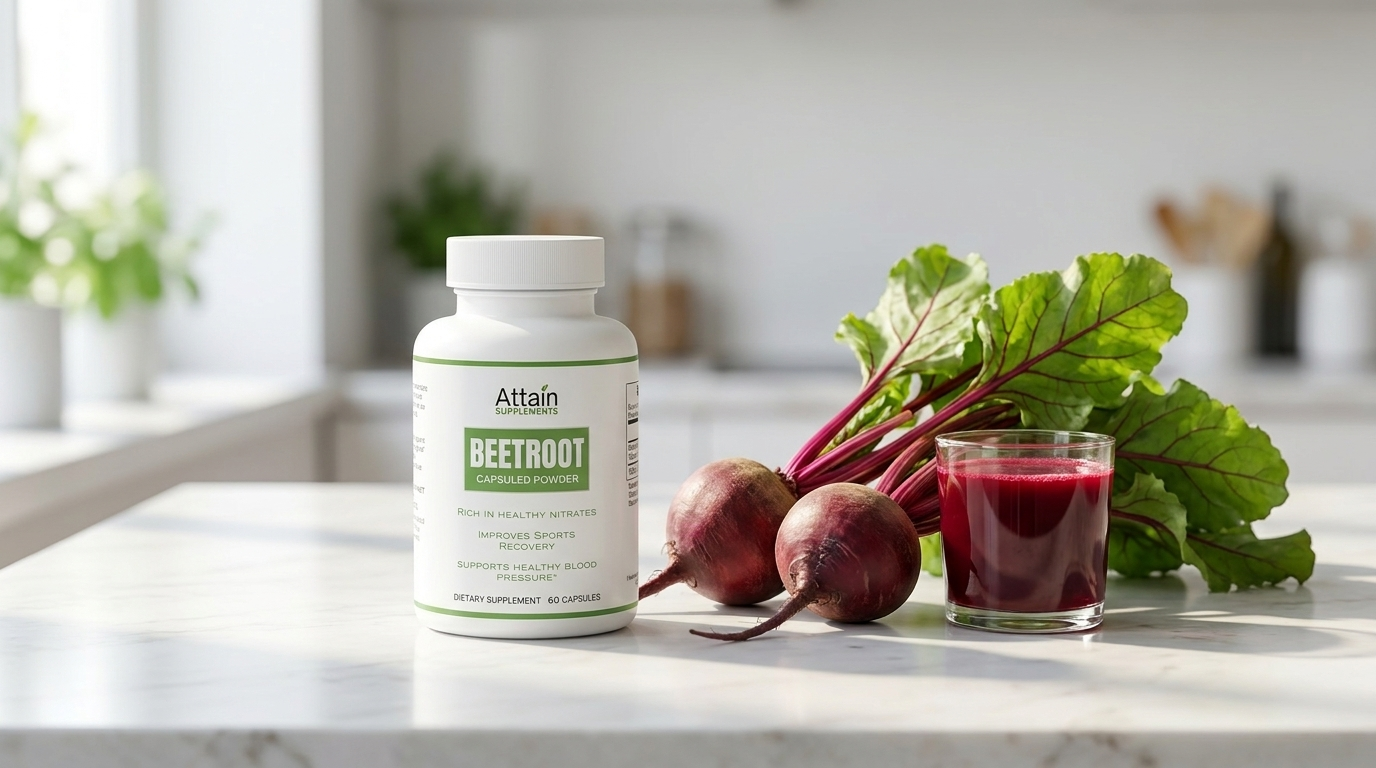
Beetroot has earned its place as one of the most researched functional foods in wellness. Behind its deep crimson color is a unique combination of dietary nitrates, betalain antioxidants, vitamins, and minerals that work together to support circulation, stamina, and everyday vitality. This guide breaks down what the science actually says about beetroot, how the different beetroot supplements compare, and how to use them to support your routine.

What Makes Beetroot Special
Beetroot (Beta vulgaris) is naturally rich in dietary nitrates, which the body converts into nitric oxide — a molecule that helps blood vessels relax and widen. It also delivers betalains, the pigments responsible for its color, which act as antioxidants, along with folate, manganese, potassium, and fiber. Concentrating beetroot into a powder or capsule makes these compounds easy to take consistently, without cooking and eating several whole beets a day.
5 Evidence-Backed Beetroot Benefits
1. Supports Healthy Circulation & Blood Pressure
The most studied benefit of beetroot comes from its nitrate content. Once converted to nitric oxide, these nitrates support the natural widening of blood vessels and healthy blood flow. A widely cited 2008 study in the journal Hypertension found that dietary nitrate from beetroot supported blood pressure already within a normal range, and later reviews have echoed a supportive role for circulation. Beetroot is best viewed as daily nutritional support for a healthy cardiovascular system — not a replacement for medication.
2. Supports Exercise Performance & Endurance
Because nitric oxide improves how efficiently muscles use oxygen, beetroot has become a staple among athletes. Research published in the Journal of Applied Physiology has shown that beetroot nitrate can reduce the oxygen cost of exercise, helping you sustain effort a little longer. Many people take beetroot 2–3 hours before training or a long walk to support stamina.
3. Supports Focus & Brain Blood Flow
The same circulatory support that benefits muscles may also benefit the mind. Improved blood flow helps deliver oxygen and nutrients to brain tissue, which is why several studies have explored beetroot's role in supporting cognitive performance, particularly in older adults.
4. Provides Antioxidant Support
Betalains — the compounds that give beetroot its color — help neutralize free radicals and support the body's defenses against everyday oxidative stress. Pairing beetroot with other colorful, antioxidant-rich foods is a simple way to round out your routine.
5. Supports the Body's Natural Detox Pathways
Betalains also support healthy liver function and the body's own detoxification processes. Combined with beetroot's fiber content, this makes it a gentle, food-based addition to a balanced diet.
Beetroot Powder vs. Capsules vs. Juice
All three forms can be effective; the right one comes down to convenience.
- Capsules — the most convenient, travel-friendly option, with no taste and a consistent dose. Our Organic Beetroot Capsules are made from concentrated beetroot powder.
- Powder — easy to blend into smoothies, with flexible serving sizes. Beetroot is also a key ingredient in our Reds Superfood blend.
- Juice — fast-absorbing but higher in natural sugars and less shelf-stable.
How to Take Beetroot
A typical beetroot supplement serving ranges from about 500 mg to several grams of concentrated powder daily; follow the directions on your product label. For exercise support, take it 2–3 hours beforehand. For general wellness, consistency matters more than timing — a daily serving as part of a balanced diet is the simplest approach.
One harmless note: beetroot can temporarily tint urine or stool pink or red (called beeturia). If you are prone to kidney stones, are pregnant or nursing, or take blood-pressure or nitrate medication, talk to your healthcare provider first, as beetroot is naturally high in oxalates and supports circulation.
Frequently Asked Questions
Does beetroot really help lower blood pressure?
Beetroot's dietary nitrates support healthy circulation and blood pressure already within the normal range. It is nutritional support, not a treatment — talk to your doctor about any blood-pressure concerns.
How long does beetroot take to work?
For exercise support, effects on circulation can appear within 2–3 hours. For general wellness, consistent daily use over several weeks is best.
Is it better to take beetroot in the morning or at night?
Either works. Athletes often take it a few hours before training; for daily support, pick a time you will remember consistently.
Are beetroot capsules as good as juice?
Capsules deliver concentrated beetroot without the sugar and short shelf life of juice, which makes them easier to take consistently.

The Bottom Line
Beetroot is a simple, food-based way to support circulation, stamina, and antioxidant defenses. If you would like an easy daily option, explore our Organic Beetroot Capsules, or get beets alongside other superfoods in the Greens + Reds Duo. Browse the full Energy & Performance collection to build a routine that fits your goals. As always, consult your healthcare provider before starting a new supplement.
These statements have not been evaluated by the Food and Drug Administration. This product is not intended to diagnose, treat, cure, or prevent any disease.